Calvenne Estate · The 2025 Vintage6:04 a.m., 28 August
Thirty-one hectares of red clay and limestone, farmed by one family and picked by hand.
At six in the morning in late August the mist sits in the valley and the pickers are already in the Rolle. This is the year, told frame by frame: the ground, the vines, the harvest, the cellar and the bottles it made.
Begin with the soilCalve valley, 220 m
first light over the upper terrace
I · Spring · the ground
Soil
Calvenne sits on a single slope facing south-south-east, above the river that gives the valley its name. The top of the hill is limestone, cracked into plates; the lower terraces are red clay, iron-rich and heavy, scattered with stones that hold the day's heat long into the night.
Vines here root through the clay and into the fissures of the rock, four metres down and more. They find water in August when the surface is dust, which is why the estate has never irrigated. Each of the fourteen parcels is picked, pressed and aged on its own, so the ground stays legible in the glass.
- Elevation
- 180–260 m
- Aspect
- SSE
- Rainfall
- 640 mma year, mostly autumn
- Soil
- Clay on limestone
- Parcels
- 14
- Irrigation
- None
Bush vines in the red clay of the lower terraces. The stones are left where they lie: they shade the soil by day and give back the warmth at night.
II · 28 August · picking
Harvest
Everything is picked by hand into twelve-kilo crates, and picking stops at eleven, before the heat closes the grapes. A team of twenty-two works the slope over five weeks, parcel by parcel, as each one comes ripe.
- 28 AugRolle on the upper terracefor Blanc des Pierres
- 2 SeptCinsault and young Grenachepressed straight away for the rosé
- 9–20 SeptGrenache and Syrahthe heart of the reds, fourteen parcels apart
- 1 OctMourvèdrelast to ripen, always
Grenache a week before picking. The skins are thick this year; the seeds turn brown before the sugar is high, which is the moment we wait for.
III · September · the press house
Press
Crates go straight to the sorting table under the press-house roof. What is not perfect stays in the vineyard for the birds.
The cellar's work is mostly patience. Bunches are destemmed by hand when the stems are green, kept whole when they are ripe, and fermented with the yeasts that come in on the skins. Small concrete tanks keep each parcel apart.
- Sortby hand, same morning
- Ferment12–21 days, native yeast
- Pressbasket press, slowly
- Age14–18 months in oak
- Bottleon the estate, April
IV · 14–18 months · in oak
Cellar
The reds rest fourteen to eighteen months in 228-litre oak, a fifth of it new, and are bottled here on the estate in April. Nothing is fined; a light filtration only when a wine asks for it.
Each tank carries a chalk slate with its parcel, its pick date and the morning's sugar reading, so a visitor can walk the row and read the vintage tank by tank.
- Cellar
- 13 °C
- Tanks
- 18concrete
- Bottles
- c. 62,000a year
The barrel cellar, cut into the hill below the farmhouse. It holds 13 °C through the year without a single machine.
V · 2025 · the tasting room
Pour
Coteau Rouge, poured in the tasting room.
Cellar-door tasting
€15Four wines at the long counter, about 45 minutes. No booking needed; credited when you take two bottles home.
Cellar & vineyard walk
€38Ninety minutes up the slope and down into the cellar with one of the family, ending with a taste from barrel. Tue, Thu & Sat at 10:00.
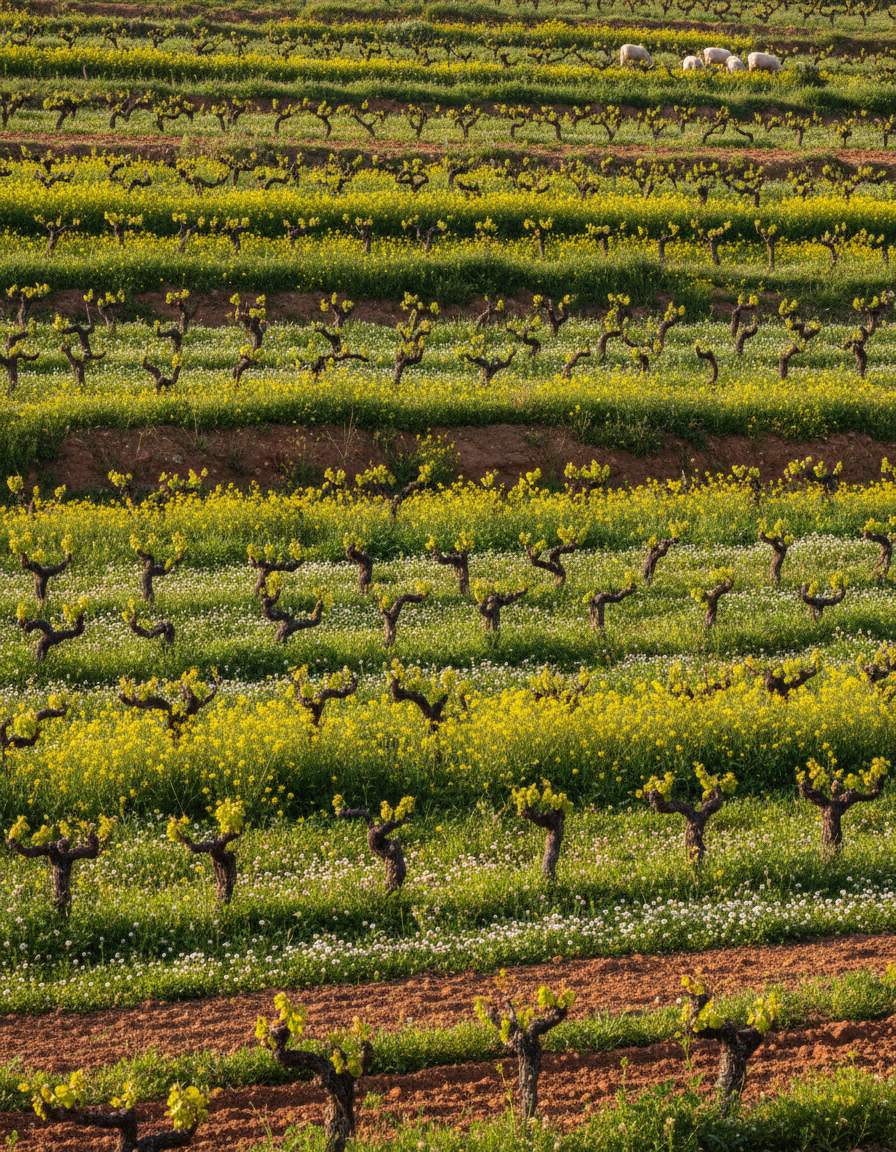
The vines
Vines
Every vine at Calvenne stands on its own. They are pruned as low goblets, with no wires and no posts, the old way of the south: the leaves shade the fruit and the wind moves through the rows. The oldest Grenache was planted in 1948 and still gives a handful of small, dark bunches per plant.
Nothing synthetic goes on the soil. A cover crop is sown each autumn, the sheep graze it through the winter, and it is rolled flat in May to keep the moisture in. Pruning starts in January, by hand, one vine at a time.
Planted varieties, share of the estate
Average vine age 46 years. Yields kept near 35 hectolitres per hectare.
From the cellar door
The wines
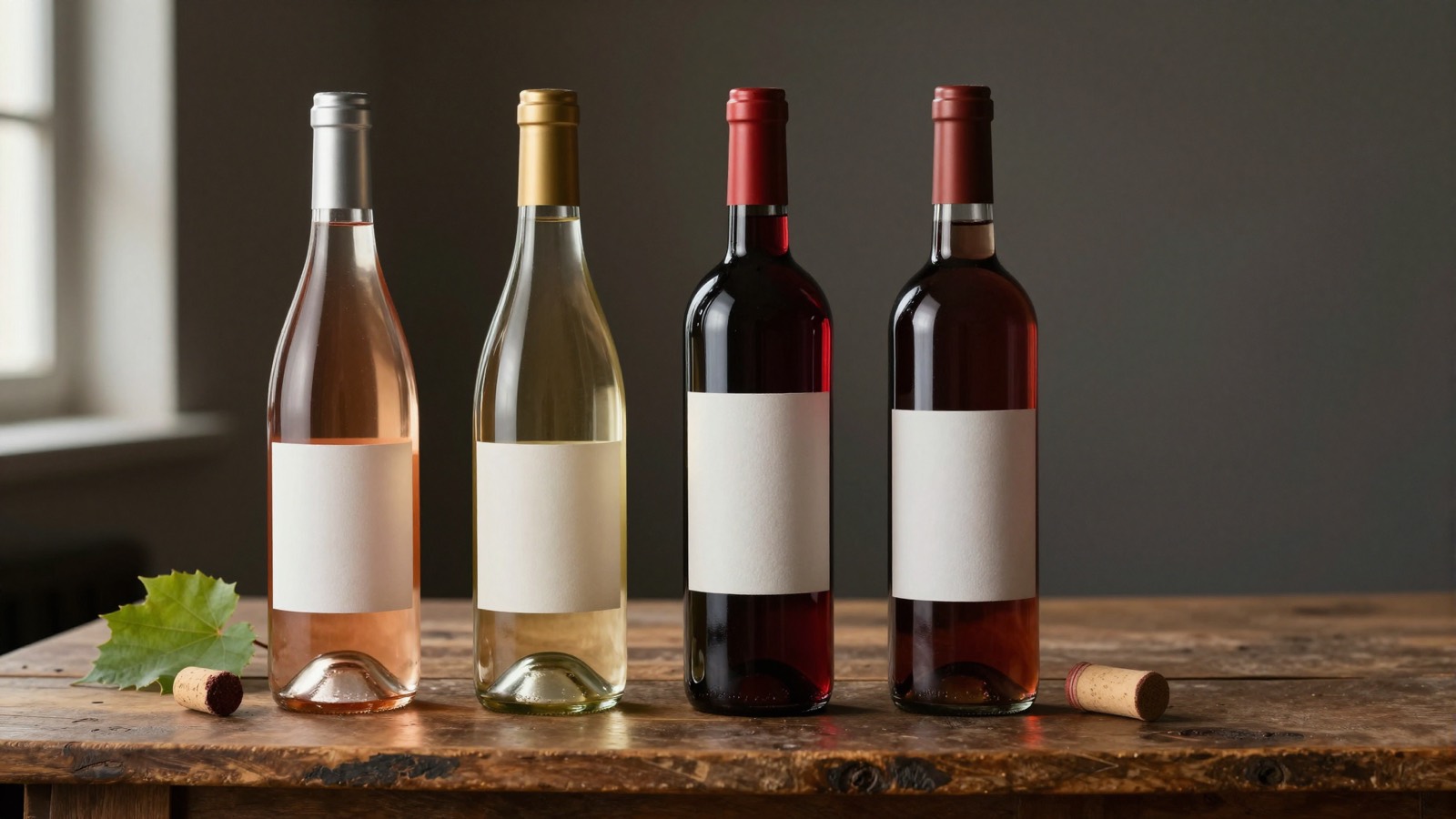
Rosé de l'Aube 2025
€19Cinsault · Grenache
Pale onion-skin; white peach, crushed fennel and a salt finish. Pressed at dawn, made for this summer.
Blanc des Pierres 2024
€24Rolle
Pear, chamomile and a flinty line from the limestone. A little oak for weight, never for flavour.
Coteau Rouge 2023
€26Grenache · Syrah · Cinsault
Raspberry, garrigue and black olive; supple and bright. Serve it a little cool, with lunch.
Grand Vin 2021
€58Grenache · Mourvèdre · Syrah
From the 1948 vines. Dark cherry, leather and bay leaf; firm and long. Best from 2027 to 2040.
Per 75 cl bottle at the cellar door. Six-bottle cases ship within the EU.
Come to the estate
Visit & table
Cellar-door tasting
€15Four wines at the long counter, about 45 minutes. No booking needed; credited when you take two bottles home.
Cellar & vineyard walk
€38Ninety minutes up the slope and down into the cellar with one of the family, ending with a taste from barrel. Tue, Thu & Sat at 10:00.
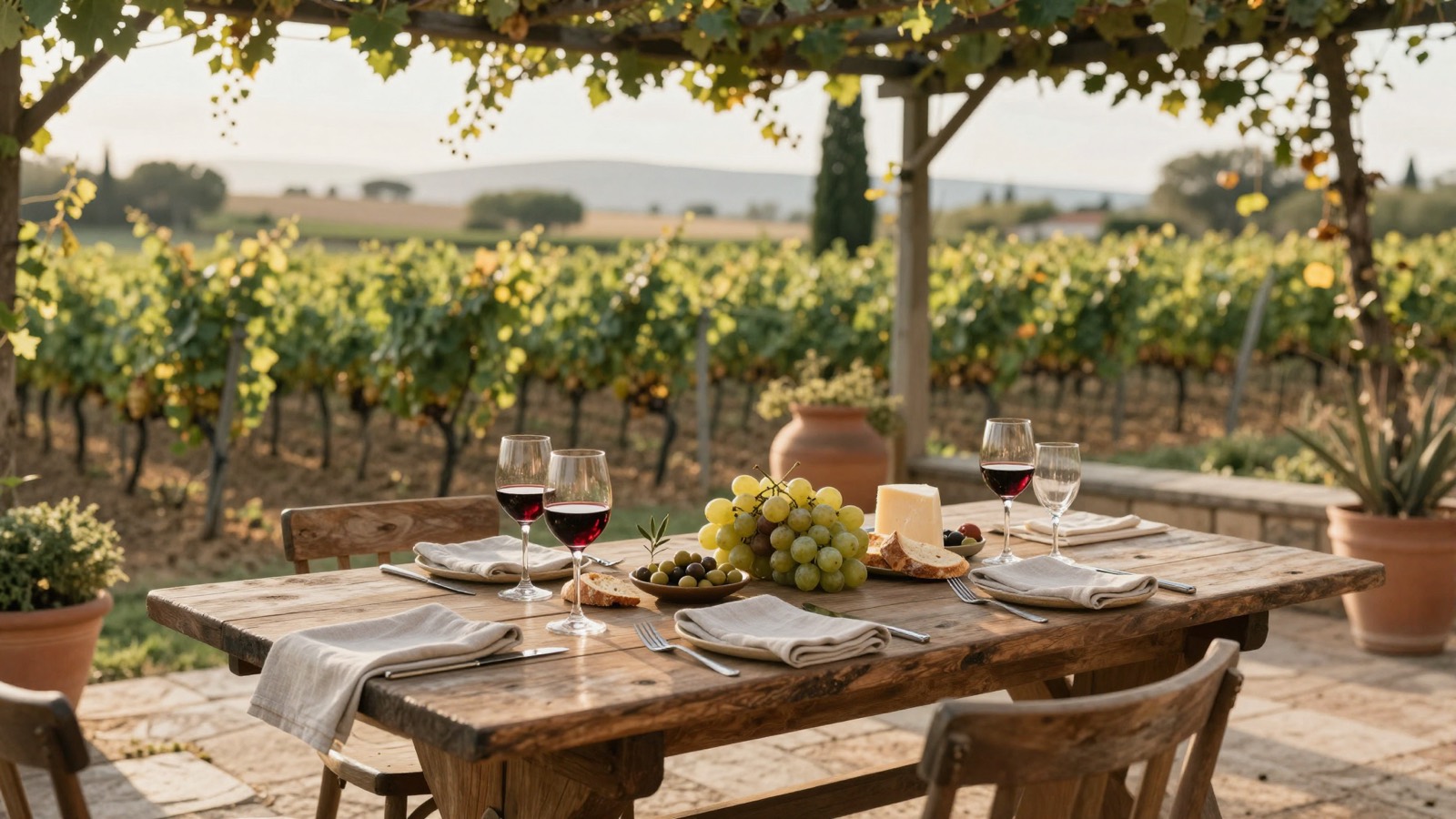
The long table
Friday and Saturday at 12:30, April to October. Four courses from the kitchen garden and the valley, each poured with a Calvenne wine. Twenty-four seats, €65 a person with the wines.
Reserve a seatBook a walkBefore you come
Hours & the way here
- Apr – Oct
- Tuesday to Sunday, 10:00–18:00
- Nov – Mar
- Thursday to Saturday, 11:00–17:00
- Long table
- Friday & Saturday, 12:30
- Tastings
- Five wines, €15, waived with any two bottles
- Closed
- Mondays, and during the harvest weekends
Twenty-five minutes inland from the coast road. Follow the signs for the Calve valley, then the stone lane past the chapel; park by the press house. From the station, the cellar can send a car with a day's notice.
- The cellar door and terrace are step-free.
- Dogs are welcome on the terrace, not in the cellar.
- Walks go ahead in light rain; bring shoes for clay.
- Bottles can be shipped within the EU from the cellar door.
- Write to cellar@calvenne.example for groups over eight.
Set in Cormorant Garamond and EB Garamond. The 2025 vintage, kept at the cellar door for anyone who asks what happened this year.
Back to first light