Omakase · sushi & kappō · Nakagyō, Kyoto
KirimadoEight seats, one hinoki counter, and a window cut into the wall.
One itamae, two seatings a night. You sit where he works, the fish arrives from the morning market, and the menu is whatever the day allowed. 切窓, kirimado, is the small window a teahouse cuts to let the light in. The counter is ours.
- 8 seatsone counter, no tables
- 17:30 · 20:30two seatings, Tue–Sat
- ¥32,000omakase per guest
一The counter
You sit where he works.
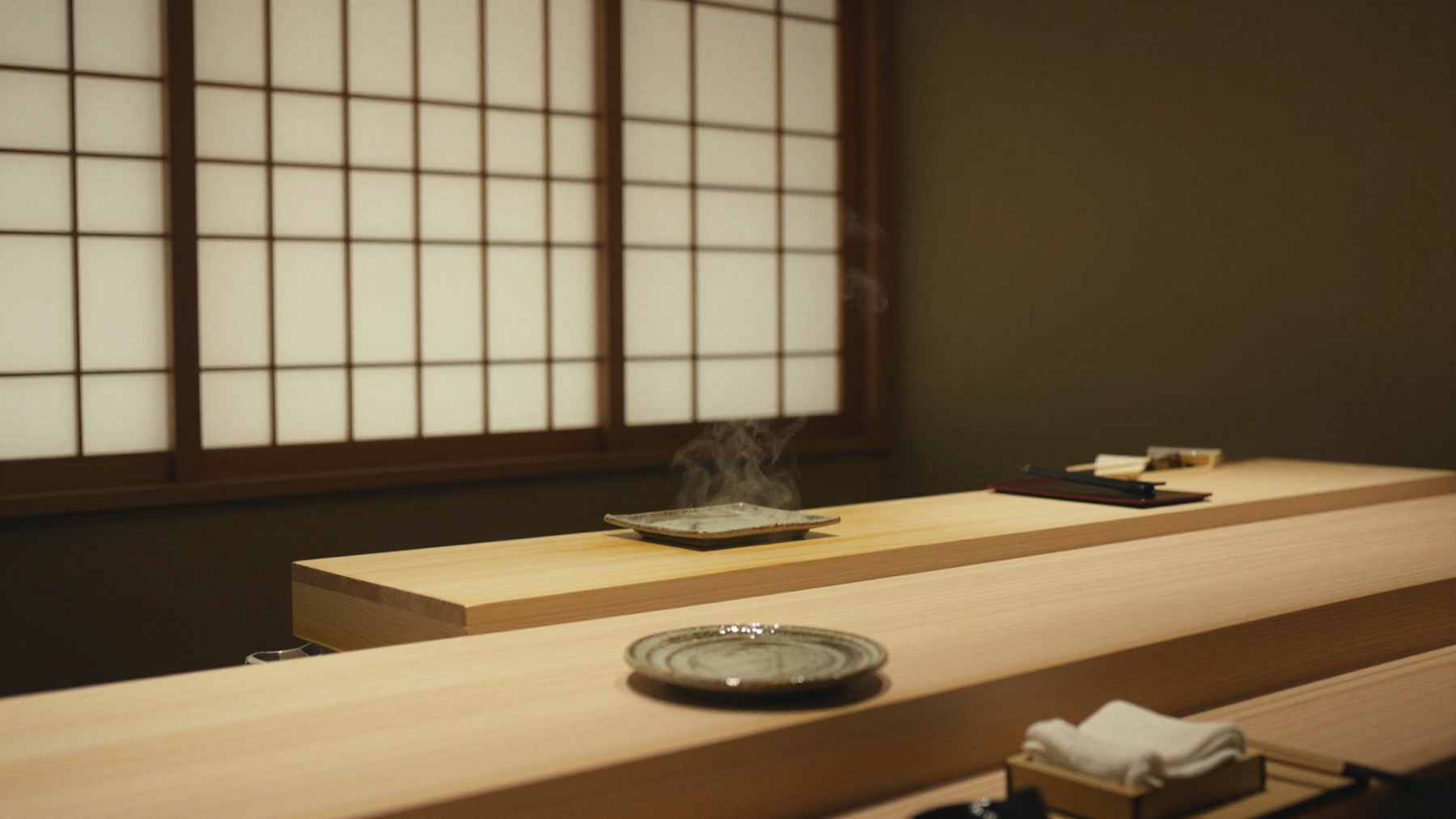
The counter is a single length of hinoki, planed back each morning so it smells of the tree. Eight stools face the itamae across it. Each piece of nigiri is pressed in front of you and set on the wood, to be eaten within a breath, while the rice is still at body temperature.
二The market at dawn
Tonight's menu is bought at five.
Before the city is awake the itamae walks the wholesale market with the same two nakaoroshi he has bought from for years. Nothing is ordered ahead. What looks right that morning is what you eat that night, which is why we never print a menu.
三The knife
One pull, never a saw.
A slice of fish is cut in a single drawn stroke from heel to tip, hikizukuri, so the cell walls stay closed and the surface shines. The blade is single-bevel and sharpened every morning on two stones before the rice goes on.
四Omakase
It starts with the rice.
Shari is the half of nigiri nobody photographs. Ours is seasoned with akazu, a red vinegar brewed from sake lees, with salt and no sugar, and kept warm in a wooden ohitsu. Scroll, and the sequence plays piece by piece; this is a typical autumn order, never a fixed one.
五Kappō
To cut, and to cook.
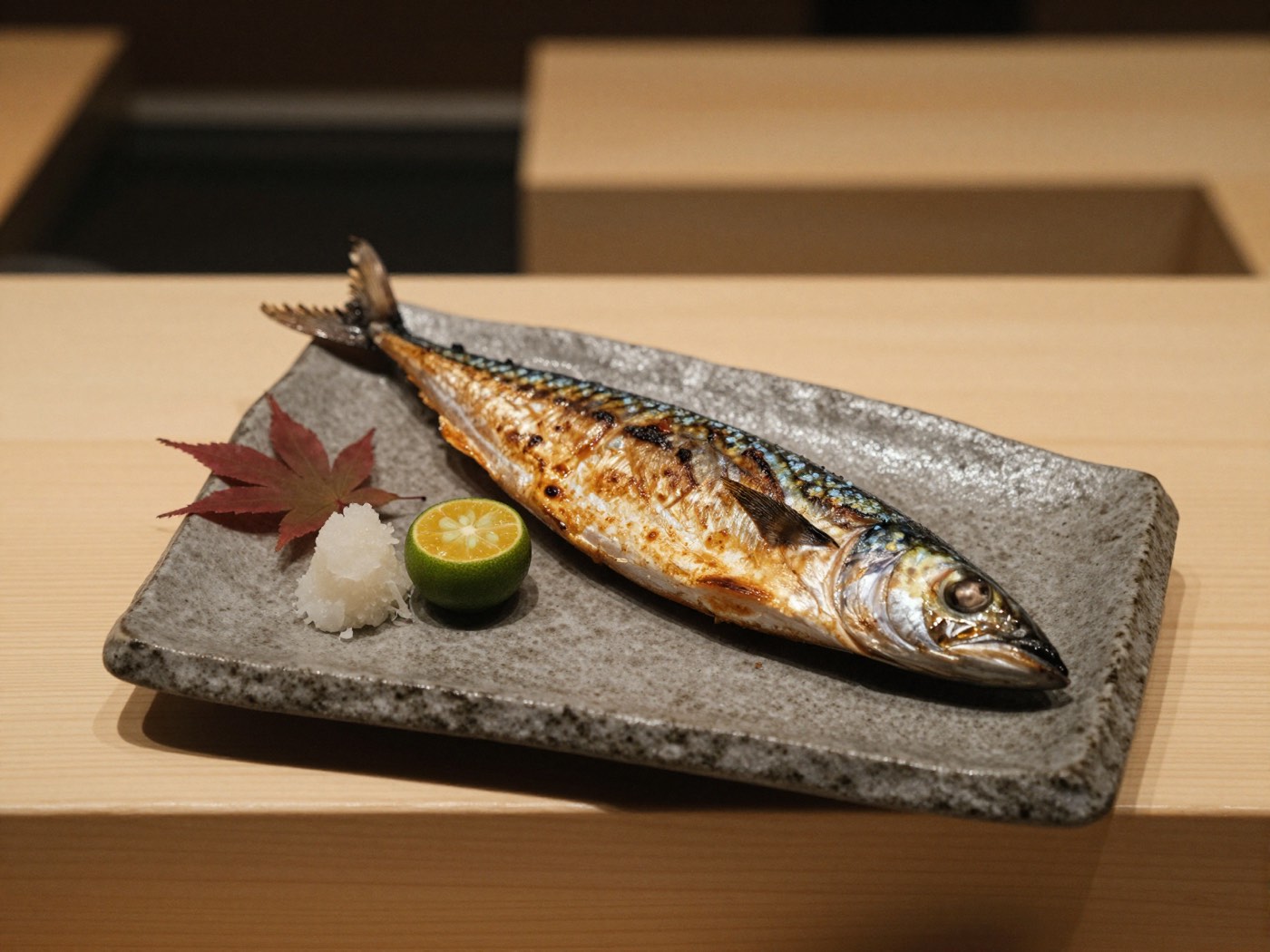
Kappō means exactly that: the knife and the fire, both in front of the guest. Between the nigiri come small cooked plates, built from the same morning's buying and from whatever the season is doing that week.
六Sake
Poured from a tokkuri, never chilled to silence.
The list is short and all junmai: rice, water, kōji, nothing added. It comes in a tokkuri and you drink from an ochoko you choose off the tray. Some of it is better warm; we will tell you which, and you may ignore us.
七手仕事 · The chef's hands
Four dishes, watched from the stool.
Akami, pulled thin引造り
Lean bluefin, aged four days in kombu-lined paper. The yanagiba does the work; the hand only guides it.
Nigiri, in three movements握り
Rice at body temperature, fish at cellar temperature. The whole piece takes eight seconds of hand time.
Salmon aburi, seared at the counter炙り
The flame goes on after the press, so the rice stays cool while the fat on top starts to run.
Zōsui, the last bowl雑炊
The night's dashi, rich with everything it has poached, finishes as rice. It is the only dish nobody photographs and everybody remembers.
01 / 04
八Reserve
Eight seats.
Ask for one.
Requests open on the first of each month for the month after. We confirm by email within a day and hold the seat until noon on the day. Tell us about allergies when you ask: the menu is built that morning and we cannot change it at the counter.
- ¥32,000omakase, per guest
- ¥14,000sake pairing
- 1–8guests per request