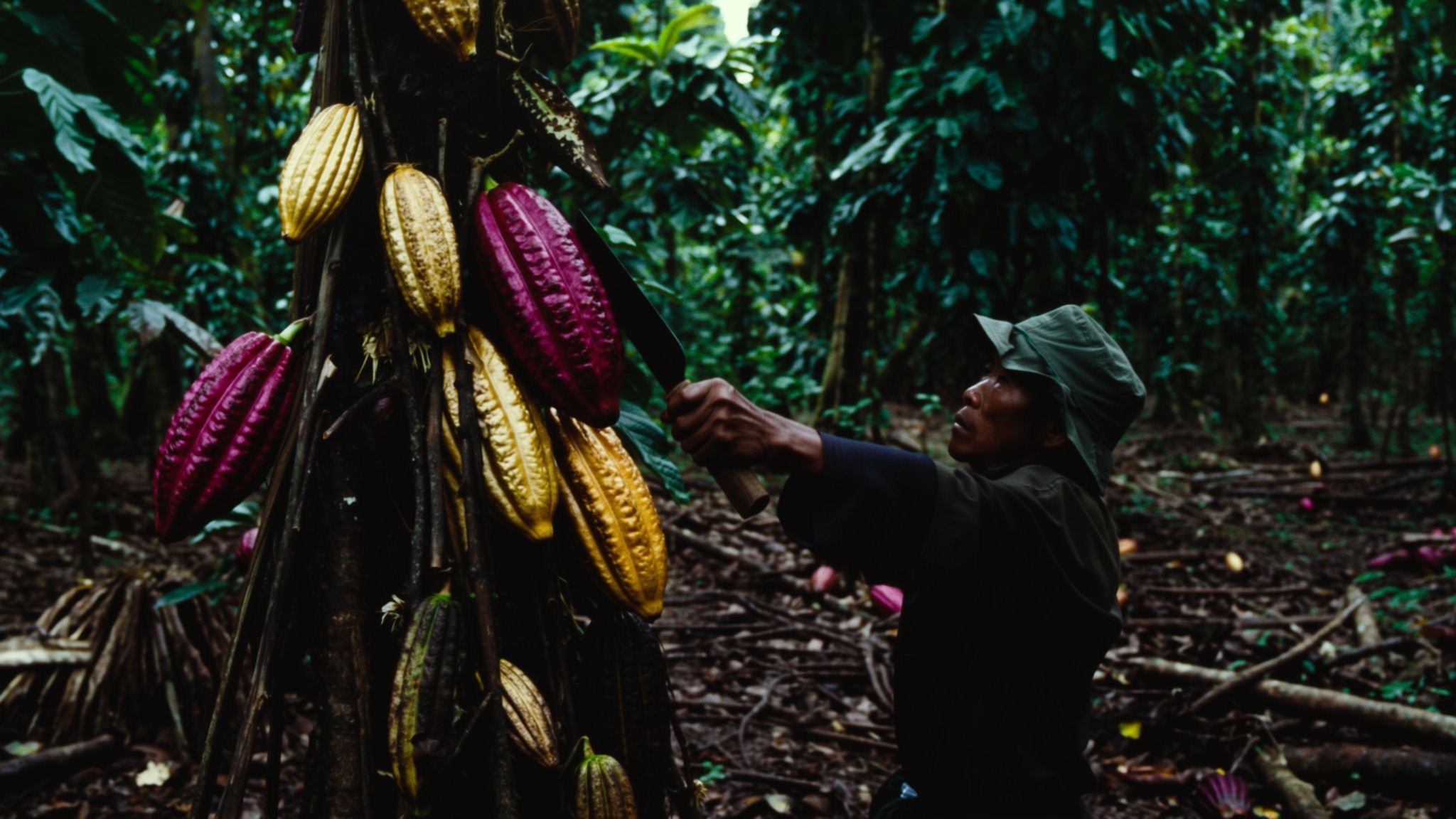
The three origins
Flavour starts on the farm.
Whole harvests from three growers' co-operatives in Peru, Madagascar and Colombia, at prices agreed before the pods are cut.
Why it matters
Their fermentation decides more than we do.
Most of what you taste in a FÈVE bar was settled before the beans left the farm. So we buy the whole harvest, every year, from the same growers.
- Harvest
Pods are picked when the husk turns full ochre or magenta, and opened the same day.
- Ferment
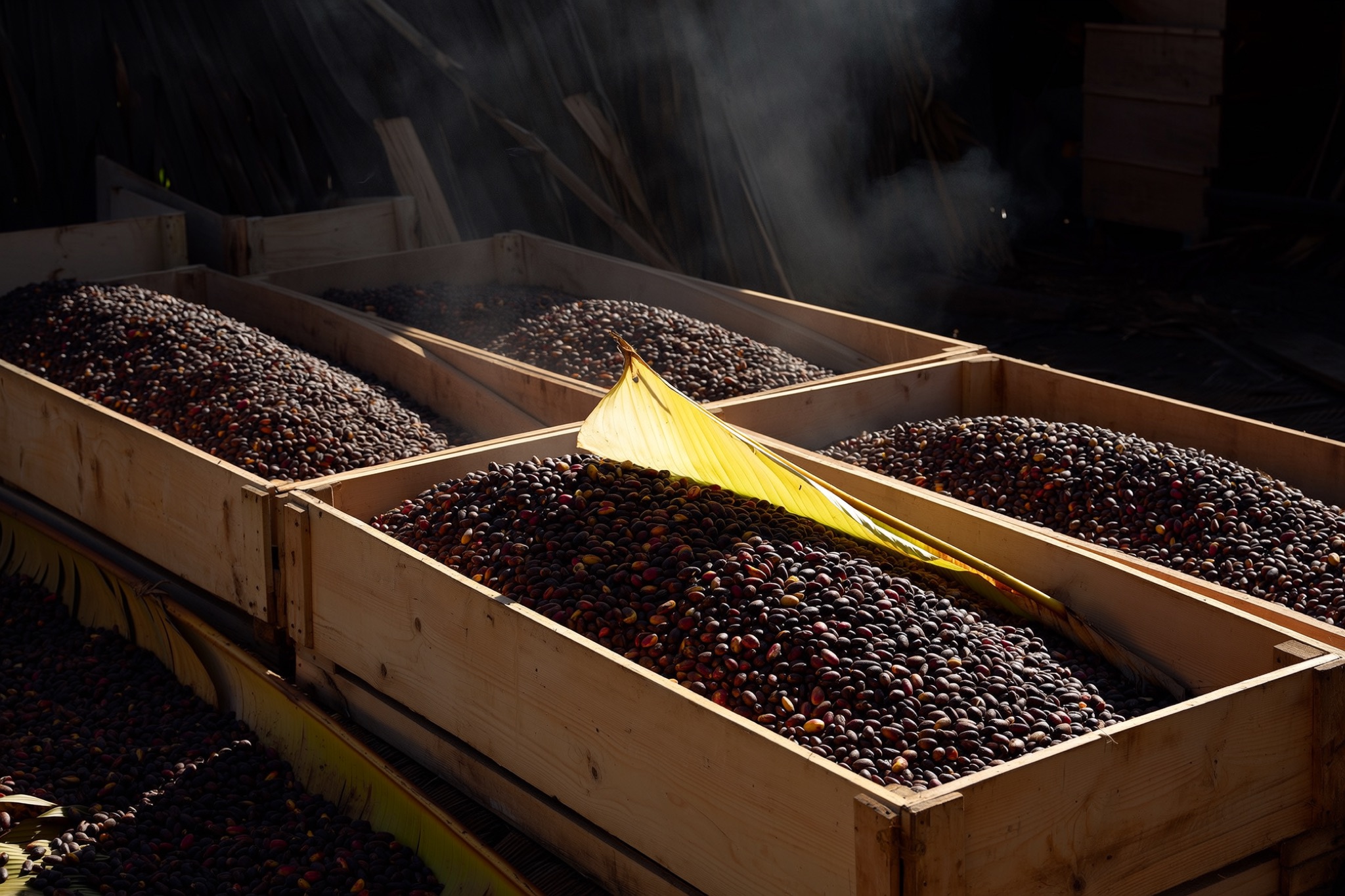
Six days in cascading wooden boxes under banana leaves, turned every forty-eight hours.
- Dry
Ten days on raised beds in the sun, down to seven percent moisture.
- Ship
Sealed sacks cross by sea and reach Lyon within three months of the harvest.
No. 01 · Peru
Ucayali, red fruit.
In the Amazon basin east of the Andes, pods ripen in the shade of tall forest. The beans carry a bright raspberry acidity that we keep by roasting gently.
- Bar
- Rouge, 72%
- Roast
- 125 °C
- Tasting
- Raspberry, pink peppercorn, warmth
No. 02 · Madagascar
Sambirano, citrus and cream.
In the river valley of the north-west, beans ferment in cascading boxes under banana leaves. The result is soft and citric, made for a milk-dark bar.
- Bar
- Noisette, 58%
- Pairing
- Piedmont hazelnut, sea salt
- Tasting
- Brown butter, citrus, caramel
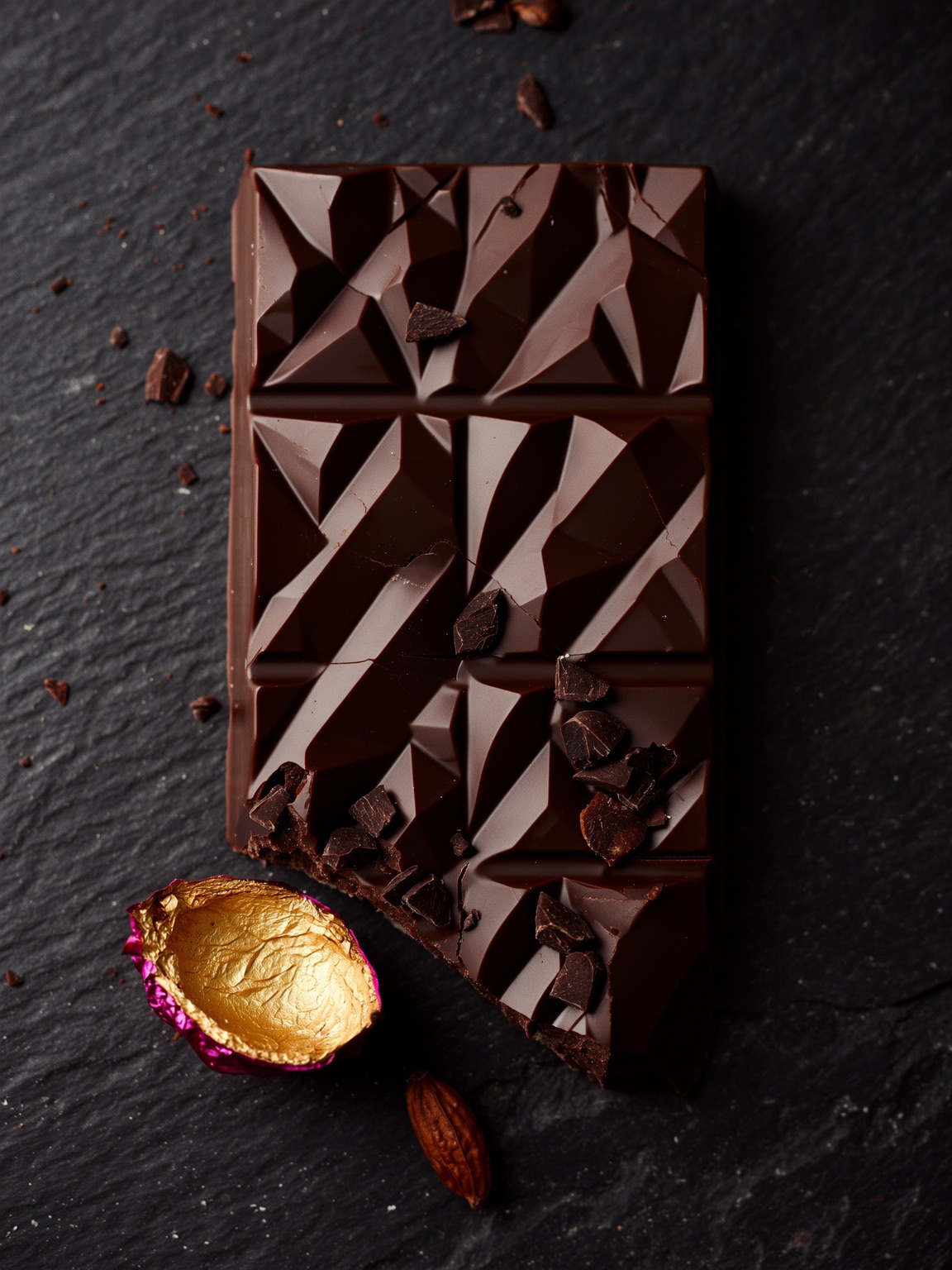
No. 03 · Colombia
Tumaco, smoke and almond.
On the Pacific coast near the border with Ecuador, the beans are dense and earthy. We roast them the hardest of the three, to 135 °C, for a dry finish.
- Bar
- Tonka, 85%
- Roast
- 135 °C
- Tasting
- Tobacco, almond, smoke
Taste all three
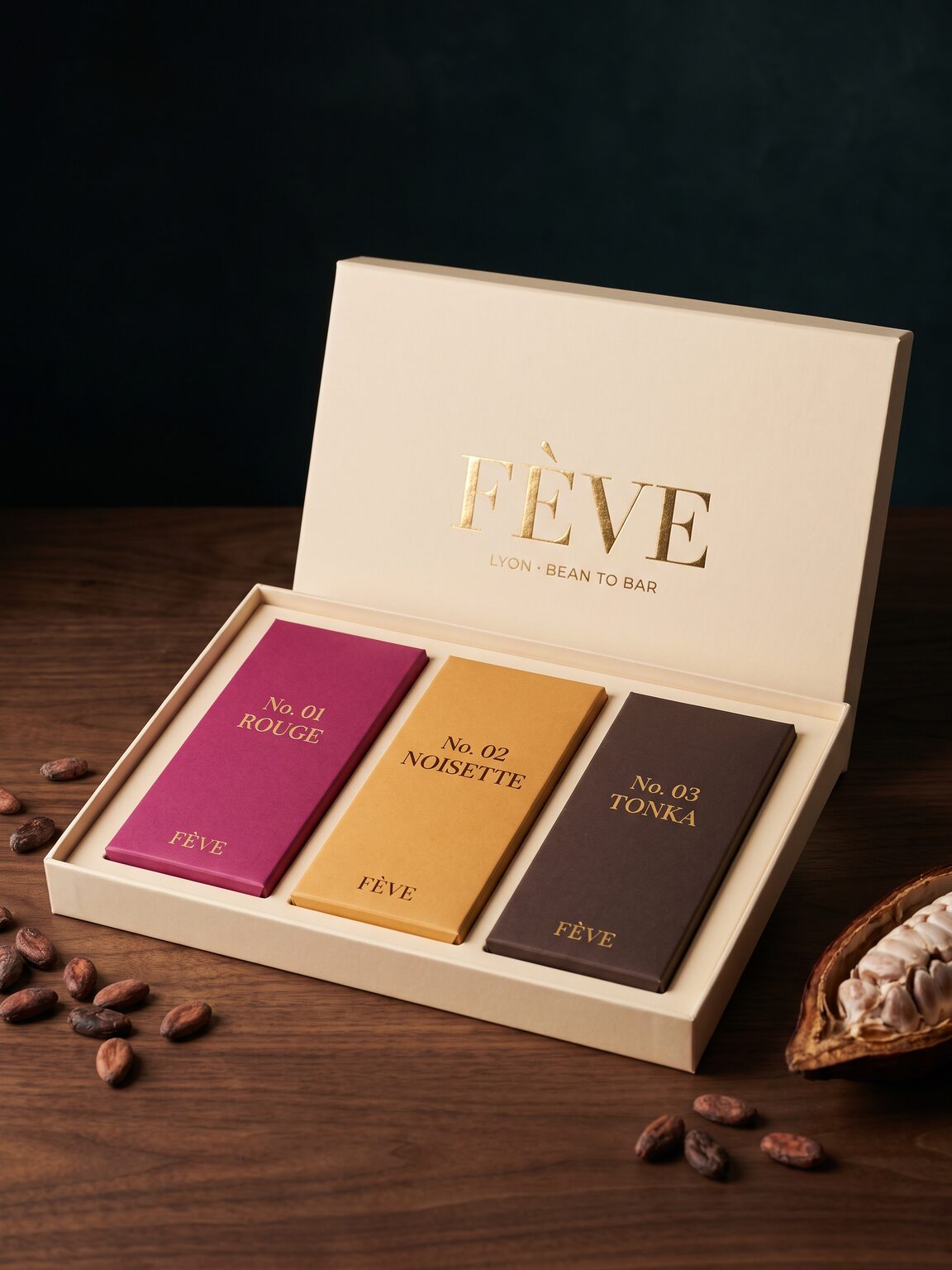
From Peru to Colombia.
Le coffret holds the three origins with a tasting card that walks from fruit to smoke.
The letter
New origins, first.
One letter a season: the next bean we are roasting, the Saturday tour dates and the first release of every new bar. Nothing else.